

Hi ,
We have a treat for everyone to thank you for helping us reach out 15,000th Youtube Subscriber! To celebrate we are sharing our most recent lesson taught by Marla Lawson with everyone in its entirety!
More than anything else, I get questions sent in from fellow learners about 2/1. What is it? Do I have to learn it if I'm happy with my current bidding system? What are the benefits anyway? All over the world we are seeing more and more players using 2/1, so - even if you don't choose it for yourself - we are all sure to increasingly encounter it online and in our clubs. Best to understand what it all means!
In today's lesson - the first in a short series on 2/1 bidding in her weekly class - Marla introduces the key aspects of 2/1 in an accessible way that reveals why it can be helpful in finding our best way to bidding game. Enjoy!!!
What do you think about 2/1? Leave a question or comment on the Youtube page here: https://youtu.be/KplBVHZVfUQ?si=7QxzJHzqBoXyrYsG
Your partner in learning,
Bajir from Learn Bridge Online


Understanding the Game Force and When to Use 2/1 Bids
At the heart of the 2/1 system is the idea that a new suit bid at the two-level by responder after a one-level opening by partner creates an immediate game force. This means neither partner can pass until a game contract is reached.
For example, if your partner opens 1♥ and you hold 14 points with three hearts, you know you have a game and a fit in hearts. But if you think you might have enough for a slam, you would respond 2♣ to set the game force and explore further.
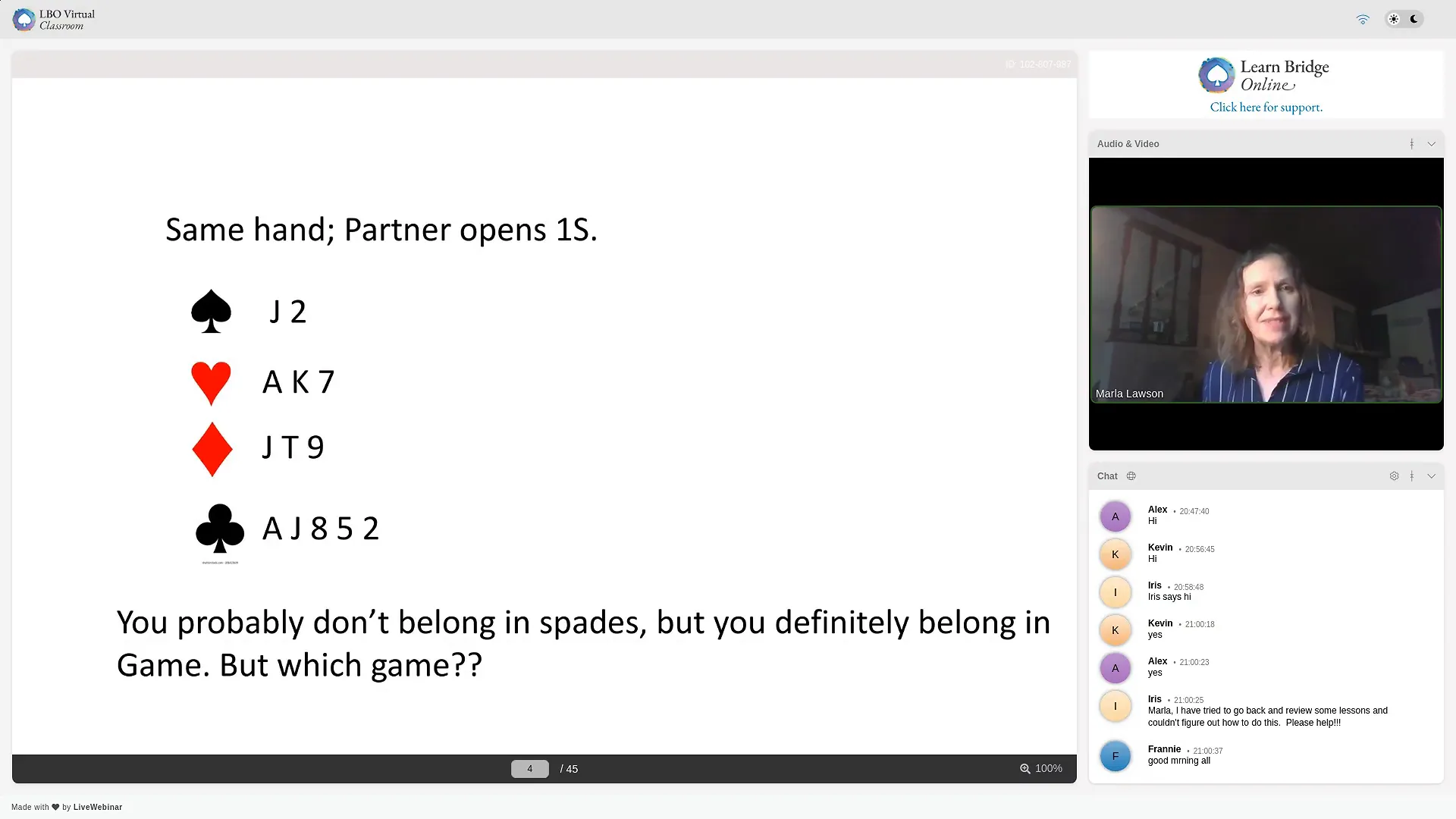
Conversely, if your partner opens 1♠ and you have 14 points but only four spades, you don’t yet have a fit for spades. You might respond 2♣ or 2♦ to create the game force and clarify the best contract as the bidding proceeds.
Key Characteristics of a 2/1 Auction
- Partner opens one of a suit (usually a major).
- Responder bids a new suit at the two-level (not a jump).
- This bid creates a game force — the partnership must reach at least game.
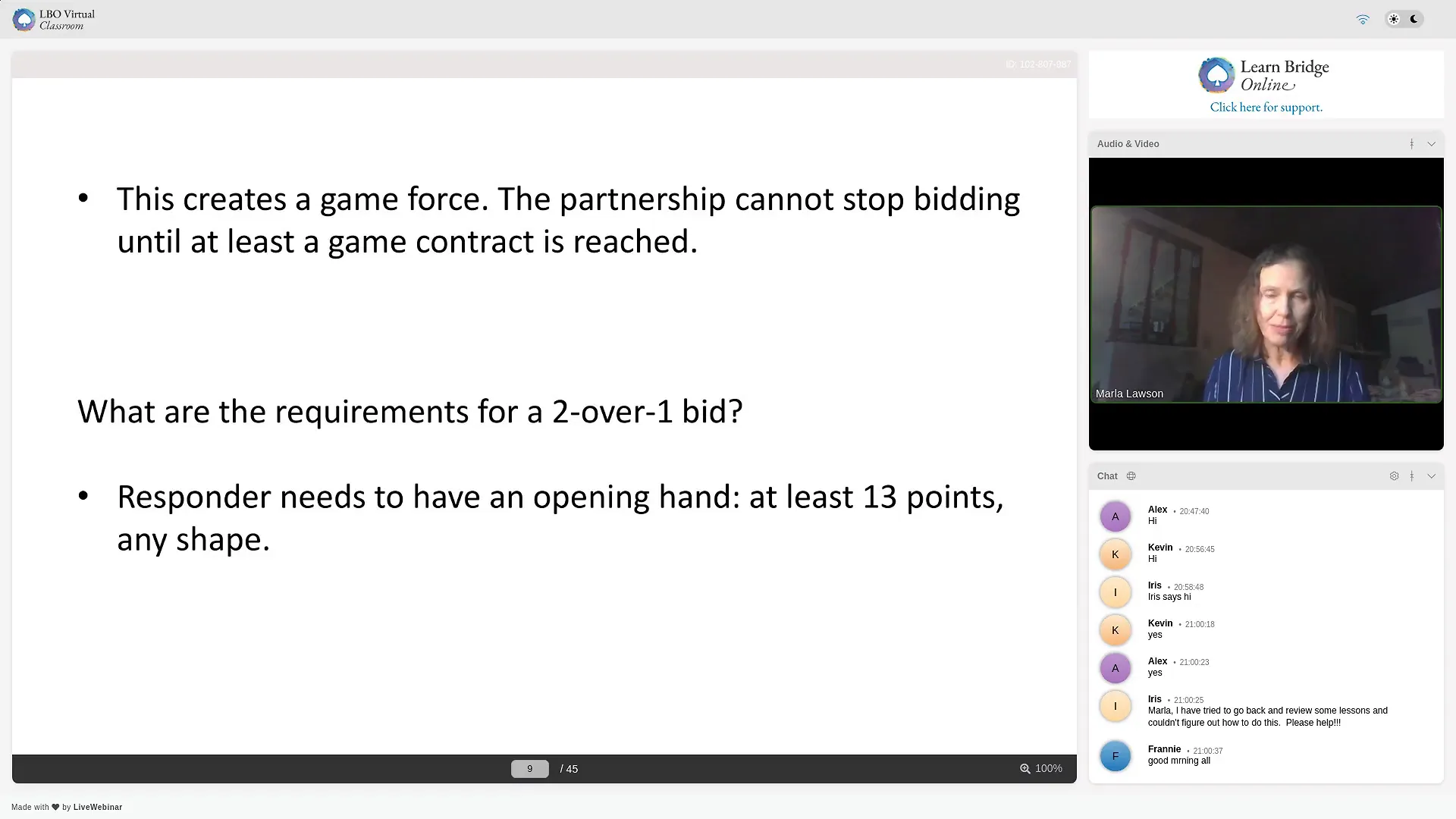
- Responder must hold an opening hand of at least 13 points.
Marla lists the valid 2/1 sequences as:
- 1♥ – 2♣
- 1♥ – 2♦
- 1♠ – 2♣
- 1♠ – 2♦
- 1♠ – 2♥
- 1♦ – 2♣
These sequences are the only ones that qualify as 2/1 game forcing bids. Bids that are jumps, no trump, or occur after interference from opponents do not count as 2/1 bids.
Choosing Which Suit to Bid at Two-Level
One common question Marla answers is how to decide between bidding 2♣ or 2♦ in a 2/1 auction. The general guidance is:
- Choose your better suit, especially if one is four cards and the other three.
- If both suits are four cards, choose the stronger suit or the higher-ranking suit depending on hand shape.
- For the special case of 1♠ opening, a 2♥ response must be a five-card heart suit (not a jump), fulfilling the 2/1 game force.
Marla stresses that you don’t always have to have a genuine long suit for the 2/1 bid. It primarily establishes the game force and says, “Partner, don’t stop bidding until we reach game.”
When 2/1 Does Not Apply
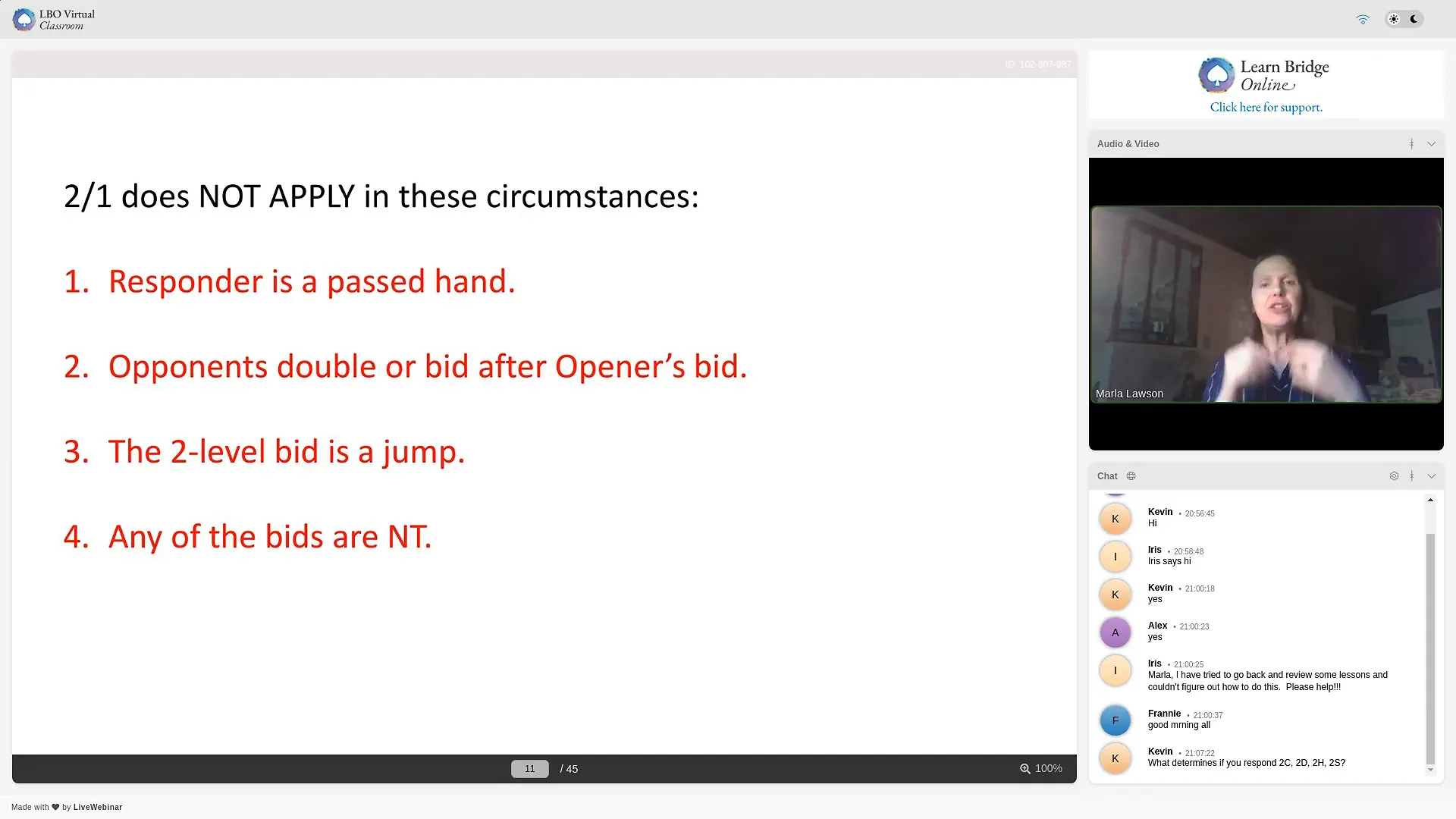
Marla clarifies several situations where 2/1 bids are not applicable:
- If responder was a passed hand (passed earlier in the auction), they lack the strength to force game.
- If opponents have intervened with a double or bid, 2/1 is off.
- If the two-level bid is a jump, it is not a 2/1 bid.
- If the bid is in no trump, it is not a 2/1 bid.
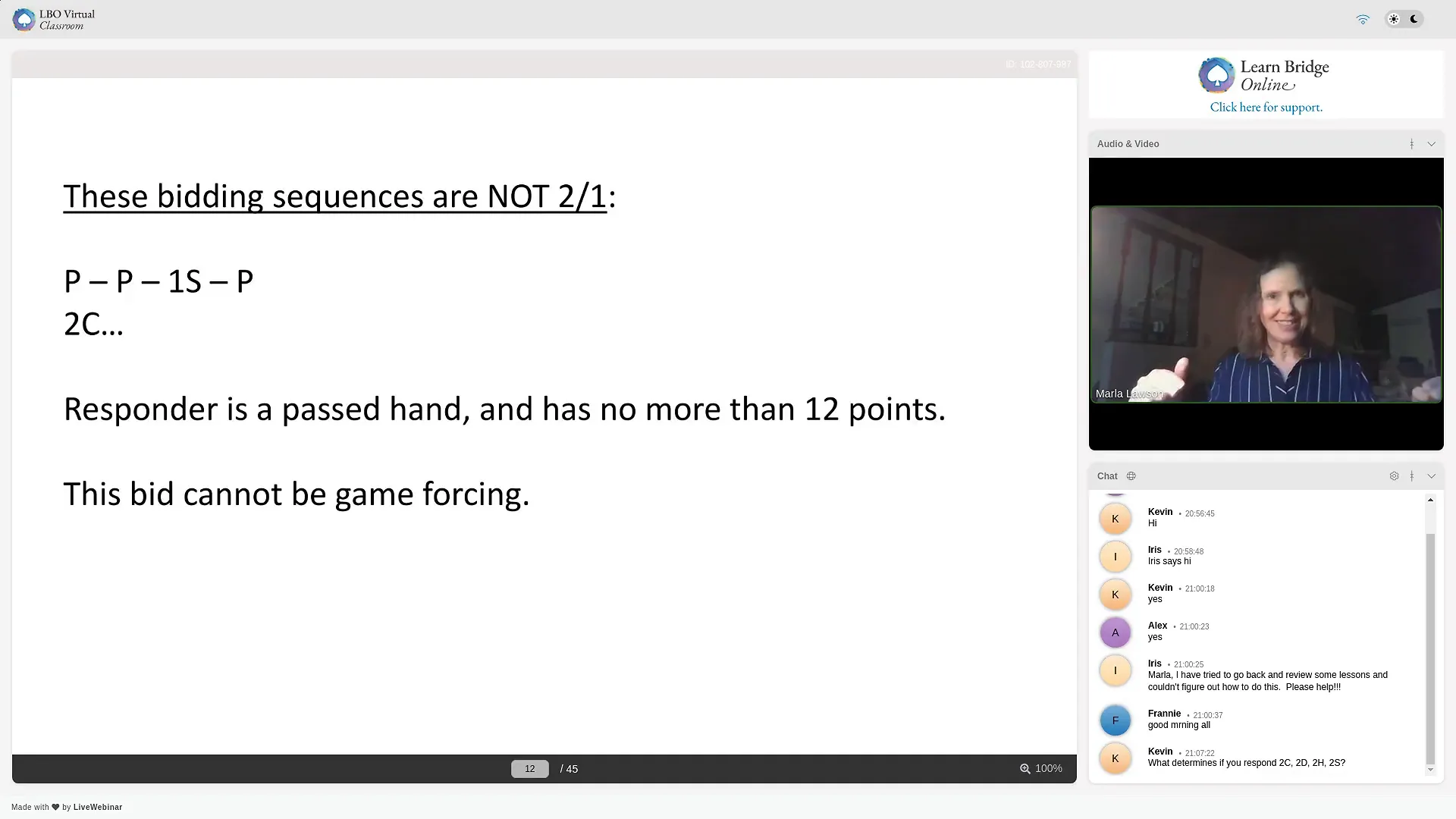
For example, pass – pass – 1♠ – pass – 2♣ is not a 2/1 auction because responder initially passed.
The Role of Opener’s Second Bid After a 2/1 Response
Once responder makes a 2/1 game forcing bid, opener’s job on the next call is to show their hand shape naturally. This means:
- If opener has a second suit with at least four cards, they should bid it, especially if it’s a major suit.
- If opener has six or more cards in their original suit, they may rebid it.
- If opener’s hand is balanced, they should bid 2NT.
- Opener may also raise responder’s suit if they have support.
There is a special exception when opener starts with 1♦ and responder bids 2♣ (a 2/1 auction). If opener holds five diamonds, they should rebid 2♦ even without six cards, to show their shape clearly and quickly.
Keep learning Marla Lawson:
https://learnbridgeonline.com/product/weekly-lesson-with-marla-lawson/
0 comments