
👋 Hey. Welcome to issue #171 of The Everyday Athlete Newsletter.
Here are my 3 favourite ideas, learns and resources to help you improve your performance this week (4 min read):
⛽️ The reason you feel burnt out: stress-first vs fuel-first days

Many everyday athletes are making the same energy mistake.
If you feel focused in the morning, tired in the arvo, not sleeping great, and over-caffeinated…
It’s likely that you’re unknowingly starting your day on stress instead of fuel.
Here’s how it can happen:
- 🥱 wake up and don’t eat
- 🏃 train fasted
- ☕️ coffee before food
- 🍳 low-carb mornings
- 😥 high work + training load
In certain contexts, no dramas.
But for the high-output, go-go-go everyday athlete?
Dramas.
These behaviours are forcing your body to use cortisol as your morning energy source.
Because when there’s no fuel coming in, our bodies crank up cortisol to break down stored energy and keep us alert.
And so we feel sharp all morning…
But then comes the crash. The wired-but-tired feeling. The sh*tty sleep. The irritability. The “I’m getting old” yarns.
But it's not age.
It’s probably just that you’re running Stress-First Days.
Fortunately, the fix is pretty simple:
- 🍊 Simple carbs before training (e.g glass of OJ, big spoon of honey, banana)
- 🥛 Simple carbs + easy-to-digest protein for breakfast (e.g whey + fruit smoothie, whey shake + oats)
- ☕️ Coffee after food
- ⏰ Predictable meal times
- 🥜 Optional fats before bed (e.g. few spoons of peanut butter)
This flips your body into a Fuel-First Day. Where your nervous system says:
“I’m safe. I’m fed. I don’t need stress hormones to function.”
The result?
Steady energy, better sleep, calmer mood, easier training.
But what about intermittent fasting? Isn't it healthy and good for fat loss?
It can be. But it's not a one-size-fits-all strategy.
If you’re:
- 😥 stressed
- 🏃 training in the morning
- 💻 working big days
- 🏡 juggling a lot
…then intermittent fasting pushes your body to rely on stress hormones for energy.
Fat loss becomes harder, not easier.
Eat first. Calm the system. Then, stack habits that support fat loss.
😥 The hidden thyroid problem in high performers

On that note, this article talks about the flow on effects of under-fueling in training and sport.
As we learned in the piece above..
When we train hard but don’t eat enough (especially not enough carbs), our bodies start producing more cortisol.
That stress response can suppress your thyroid hormone T3. Which slows metabolism, recovery, and overall performance.
This combo is now understood as part of REDs (Relative Energy Deficiency in Sport).
Which research suggests is a problem for nearly 50% of people!
Based on what I'm seeing with my clients, I think the problem stems from people using longevity tools (e.g. fasting, low-carb) in stress seasons (e.g. high workload, intense training, juggling many things).
And the mismatch is causing outcomes opposite to what people intend.
Really good breakdown of it all in the article here.
💚 The most underrated fitness score
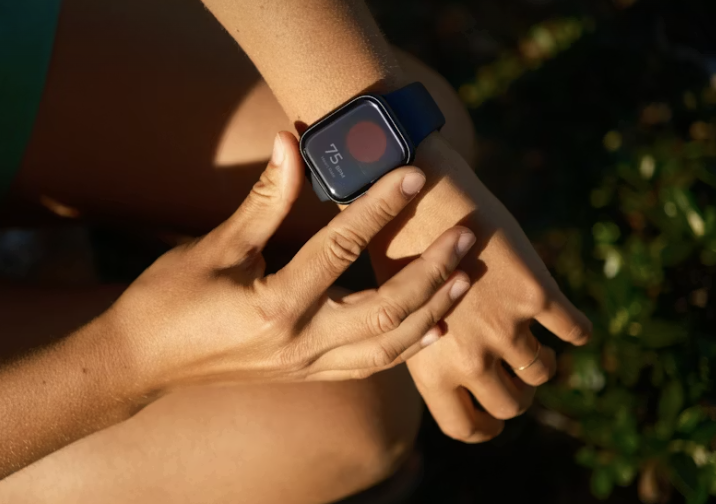
After an effort, an old coach would have us put two fingers to the neck and count heartbeats for 10 seconds.
Times it by 6 for a close-enough measure of heart rate.
A minute later we’d do the same thing.
The difference is known as Heart Rate Recovery.
And it’s one of the best indicators of cardio fitness and nervous system health.
See, anyone can rip out a big effort on the day (ahem, when I did a marathon without running more than 15km in prep - dumb). But the recovery time will be cooked.
In the minutes after. But also the hours and days.
See, the faster our heart rates return to baseline after stress, the more recovered and resilient our system is.
That drop is our body’s way of showing how quickly it can switch from fight-or-flight to rest-and-recover.
And I reckon we should be focusing on it a little more... Measuring progress more on recovery rather than just purely on performance.
Because then we can get after it the next day and the next. More consistency, more volume, more progress.
It doesn’t have to be another thing to do. We don’t have to start measuring HRR in session. Just something to be aware of. Maybe tracking how long it takes to bring your heart rate back to baseline after training. And a simple day-after-training energy check-in.
If curious, here's how we can work together:
- 💪 Adaptive Vitality Program: This is my 1-1 online coaching program. If you want to work closely with me, watch the video and follow the instructions
- 🗓️ Lean & Lively 21 Day Sprint: A lite version of Adaptive Vitality designed to give you the momentum to get back on track in just a few focused weeks
- 📞 1-1 consult (60 mins): A one-off deep dive with me. Ask anything. We’ll unpack your situation and walk away knowing exactly what you need to do next
That's it!
Have a great weekend 🤙
Matt
📬 Did someone forward this to you? I send an email like this every week. Join free here.
👇 If these emails aren't for you anymore you can unsubscribe below. No stress, they're not for everyone.
The Everyday Athlete Newsletter is not a licensed health service nor a substitute for professional health advice, treatment or assessment. The information shared in this email is general and written for a specific audience. If you’re struggling, please see a healthcare professional.
0 comments