
👋 Hey. Welcome to issue #131 of The Everyday Athlete Newsletter.
Here are my 3 favourite ideas, learns and resources to help you improve your performance this week (4 min read):
🏃 Should HR, HRV, or goal race pace guide our running programs?

I went pretty hard at a 16-week training program for a marathon in November last year. All my training was based on heart rate zones. I'll do it different next time...
A 6-week study compared three training methods for runners:
- 🏃 Race pace training: Running guided by your goal race pace
- 📈 HRV-guided training: Adjusting intensity/volume based on heart rate variability (how recovered you are)
- ♥️ Heart rate training: Following specific HR zones
The results:
- 🏃 Race pace training was the clear winner for race performance, improving 7k times by an average of 3.8%
- 📈 HRV-guided training produced the largest improvements in VO2 max and overall fitness markers (though race times were inconsistent)
- ♥️ Heart rate training improved some fitness markers (but didn't consistently improve race times)
So should we scrap HR and HRV training? I don't think so...
It was only a 6-week study, and the best approach likely depends on your specific goals:
- 🏁 Training for an upcoming race? Race pace training gives us the quickest performance wins
- 💪 Building long-term fitness? HRV-guided training may give us bigger wins for general health
- 👟 Just starting out? Heart rate training is easy to follow and pretty accessible – save you blowing a lung after 500m
The most effective training program for the everyday athlete likely combines all three:
- 😥 Use race pace for hard/tempo/track sessions
- 🏃 Heart rate for easy runs
- 😴 And keep an eye on HRV to guide overall training load and recovery over the longer term
That way we balance short-term performance with long-term health.
Or you could just put your shoes on, roll out the door and run for the joy of it. If you do, tell me how.
🫒 58% difference in cancer survival rate from diet intervention

Glioblastoma is a type of brain cancer. It's aggressive. Treatment failure is common. And relapse rates are high.
So researchers are hunting alternative treatments...
A recent study put some patients on a ketogenic diet (low carb, high fat).
The thought process was that glioblastoma cells' primary fuel source is glucose (from carbs). So limit carbs, limit cell growth...?
And it appeared to work quite well.
The survival rate (after 3 years from diagnosis) of the group that adhered to the keto diet was 66.7%.
Versus 8.3% (the group that didn't).
It's early research with a tiny sample size (18 people). But it's promising.
And before you start ringing the Belle Gibson alarm bells, know the study was done alongside standard conventional treatment.
Another clue that food is bloody powerful.
💊 The mental health supplement

Creatine monohydrate. What can't it do...
A recent study found:
People taking creatine alongside therapy for depression showed significantly bigger mood improvements than those just doing therapy alone.
See, creatine is essentially brain fuel. It replenishes ATP.
And research suggests that disruptions in brain energy metabolism may contribute to depression and other mood disorders.
Specifically, the increase of ATP can help with the proper function of neurotransmitters such as serotonin and dopamine — which play a role in mood regulation.
The research suggests 5-10g daily is safe for most people.
P.s. this study convinced a clinical psychologist I know to finally start taking creatine
Pp.s. she is my fiancé
Ppp.s and she's standing behind me reading this as I type
That's it!
Have a great weekend 🤙
Matt
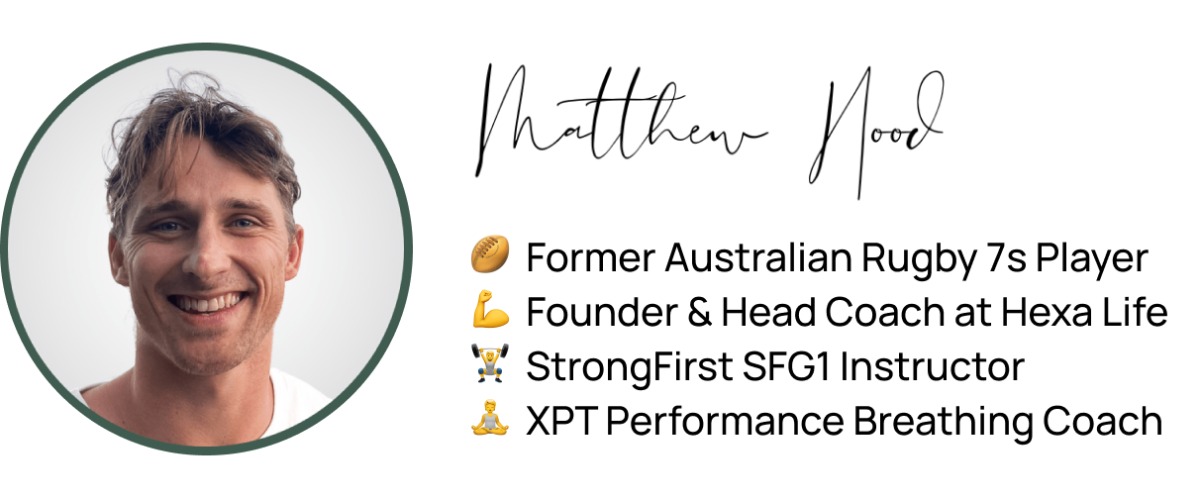
📬 Did someone forward this to you? I send an email like this every week. Join free here.
👇 If these emails aren't for you anymore you can unsubscribe below. No stress, they're not for everyone.
 Want more? Check out the Everday Athlete Toolbox and Elite Sleep Audit
The Everyday Athlete Newsletter is not a licensed health service nor a substitute for professional health advice, treatment or assessment. The information shared in this email is general and written for a specific audience. If you’re struggling, please see a healthcare professional.
0 comments