How to Build a Sustainable, Future-Ready Digital Curriculum—Without Losing the Human Touch
The Digital Transformation Dilemma
Education is rapidly evolving. Schools and institutions worldwide are racing to implement digital curricula that prepare students for an uncertain future. But in this rush toward digitization, something essential is often lost: the human connection that makes learning meaningful.
After three decades working with educational institutions, I've witnessed countless digital initiatives fail not because of poor technology, but because they sacrificed the human elements that make learning stick. The good news? You don't have to choose between innovation and connection. The most effective digital curricula actually enhance human interaction rather than replace it.
Let's explore how to build digital learning environments that are both future-ready and deeply human.
Why Traditional Digital Curriculum Development Falls Short
Most digital curriculum initiatives follow a flawed pattern:
- Start with existing materials
- Digitize them with minimal changes
- Add a few interactive elements
- Hope for the best
The result? Digital versions of outdated approaches that neither leverage technology effectively nor preserve meaningful human connection. Students disengage, educators become frustrated, and institutions wonder why their substantial technology investments aren't yielding results.
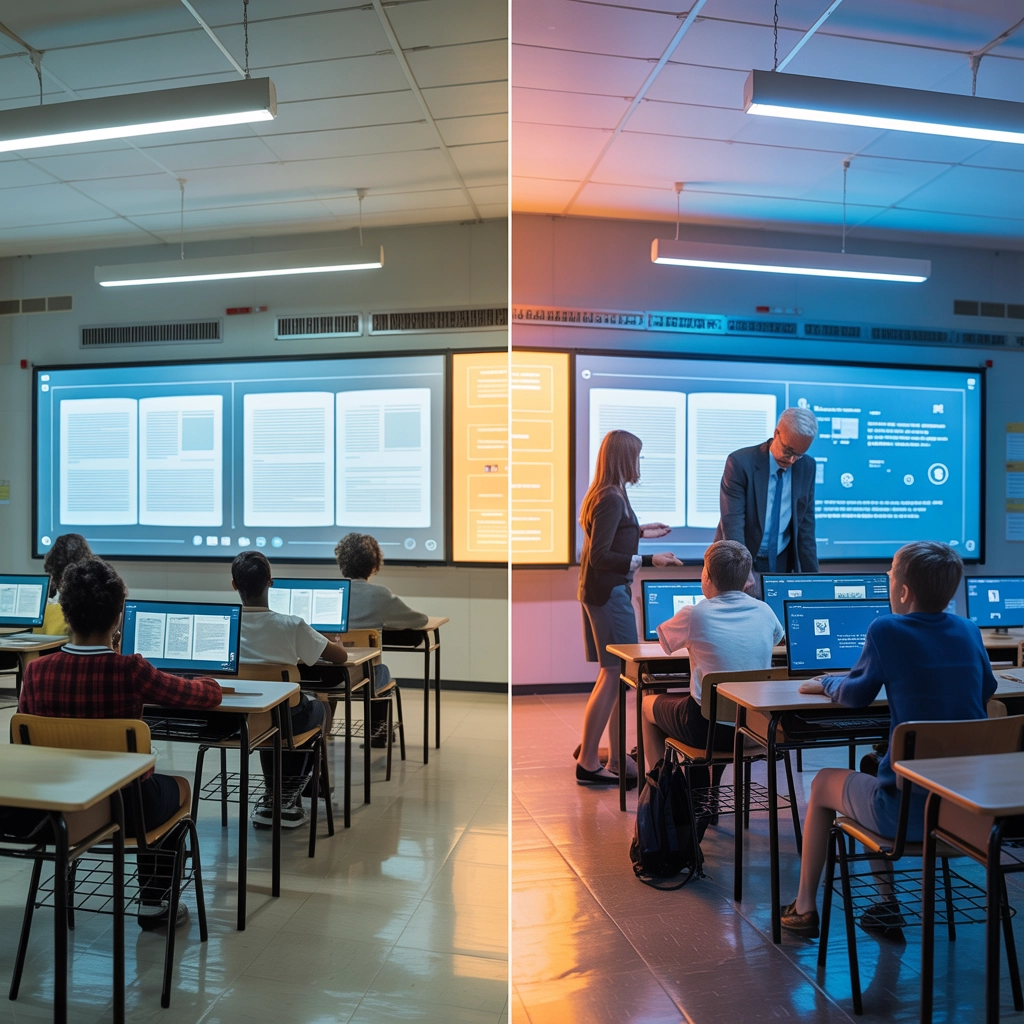
The Foundation: Seven Principles for Human-Centered Digital Curriculum
Based on research and experience with hundreds of educational institutions, I've identified seven key principles that create sustainable, future-ready digital curricula while preserving what matters most—the human touch.
1. Adopt an Online-First Design Approach
Rather than starting with traditional materials and trying to adapt them, build your curriculum as if it will be delivered fully online. This approach ensures everything is inherently digital, adaptable, and accessible.
Practical Application: Create a modular structure where each learning component exists independently but can be sequenced in multiple ways. This allows for seamless transitions between face-to-face, hybrid, or fully online delivery without redesigning content.
As one curriculum director I worked with put it: "When we designed for digital first, we stopped struggling with how to 'convert' our materials and started thinking about how to truly engage learners regardless of the delivery method."
2. Incorporate Evidence-Based Learning Frameworks
Digital doesn't mean abandoning established educational principles. In fact, research-backed frameworks like Gagne's Nine Events of Instruction become even more valuable in digital environments where educator presence may be less immediate.
The Nine Events in Digital Context:
- Gain attention (using multimedia and relevance)
- Inform learners of objectives (clear navigation and progress tracking)
- Stimulate recall of prior learning (interactive reviews and knowledge checks)
- Present the content (multimodal content delivery)
- Provide learning guidance (just-in-time resources)
- Elicit performance (authentic digital assessments)
- Provide feedback (automated and personal feedback loops)
- Assess performance (varied assessment strategies)
- Enhance retention and transfer (application in digital contexts)
3. Plan Strategic Content Management
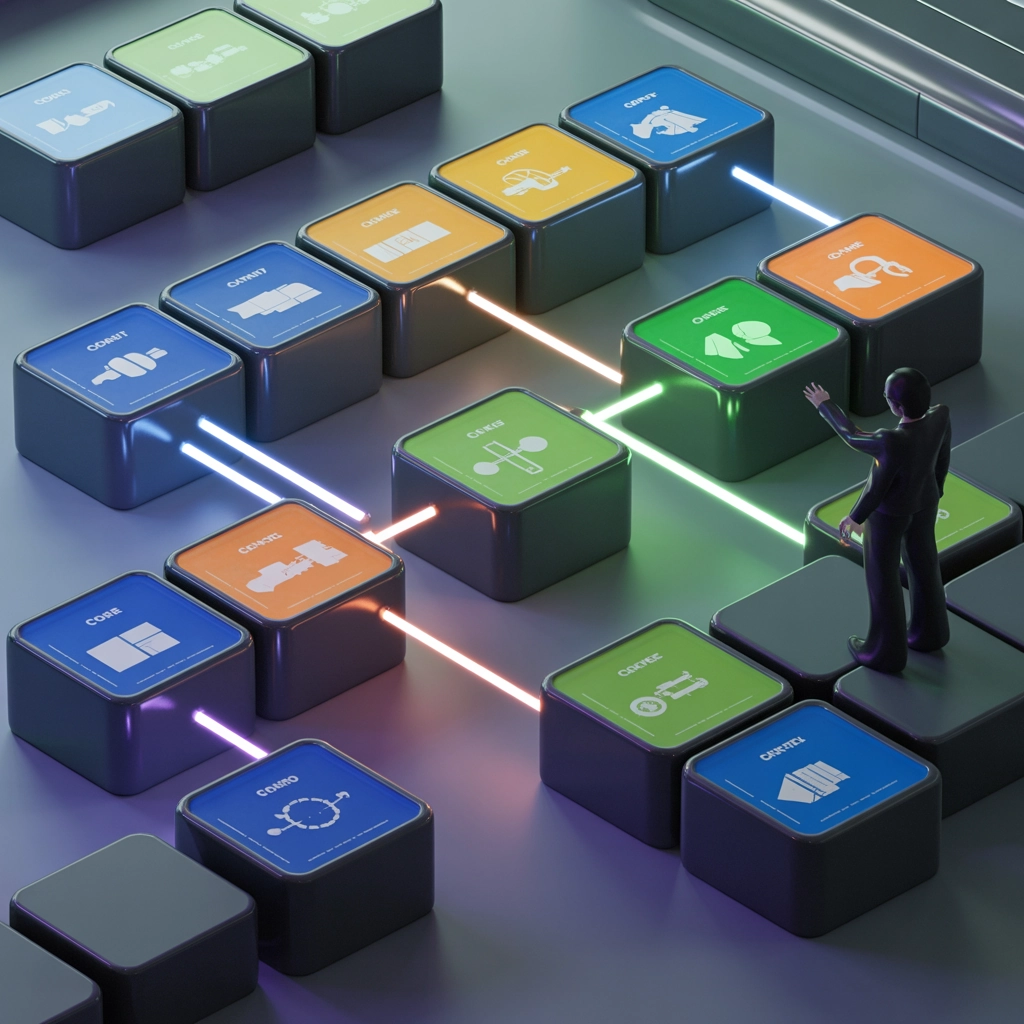
Sustainable digital curriculum requires thoughtful organization. Create a system where content can be hidden, released, and adapted based on learner needs and delivery contexts.
Key Strategy: Develop a content matrix that maps each learning module to multiple potential delivery modes. For each module, identify:
- Core content (essential regardless of delivery method)
- Synchronous elements (discussions, collaborative activities)
- Asynchronous components (self-paced content, reflections)
- Assessment approaches (appropriate for each delivery mode)
4. Implement Continuous Data-Informed Iteration
Unlike traditional curricula that might be updated every few years, effective digital curricula evolve continuously based on real-time data.
Action Steps:
- Regularly review analytics from your learning management system
- Monitor patterns in student engagement, performance, and feedback
- Establish quarterly review cycles to implement refinements
- Create feedback loops with both educators and learners
A high school principal I consulted with noted: "When we started using engagement data to refine our digital curriculum quarterly instead of annually, we saw immediate improvements in both test scores and student satisfaction."
5. Integrate Sustainability By Design
Environmental and operational sustainability should be core considerations, not afterthoughts.
Sustainable Practices:
- Design materials that reduce paper consumption and physical resources
- Create content that minimizes the carbon footprint of education delivery
- Develop learning experiences that reduce unnecessary travel through effective virtual alternatives
- Build systems that scale efficiently without proportional resource increases
6. Create Evergreen Learning Materials
The most sustainable digital curricula contain elements that remain relevant despite changing technologies and trends.
Evergreen Strategies:
- Focus on enduring concepts rather than temporary applications
- Create content layers where foundational materials remain stable while application examples can be easily updated
- Design for platform independence so content survives technology changes
- Develop modular components that can be recombined as needs evolve
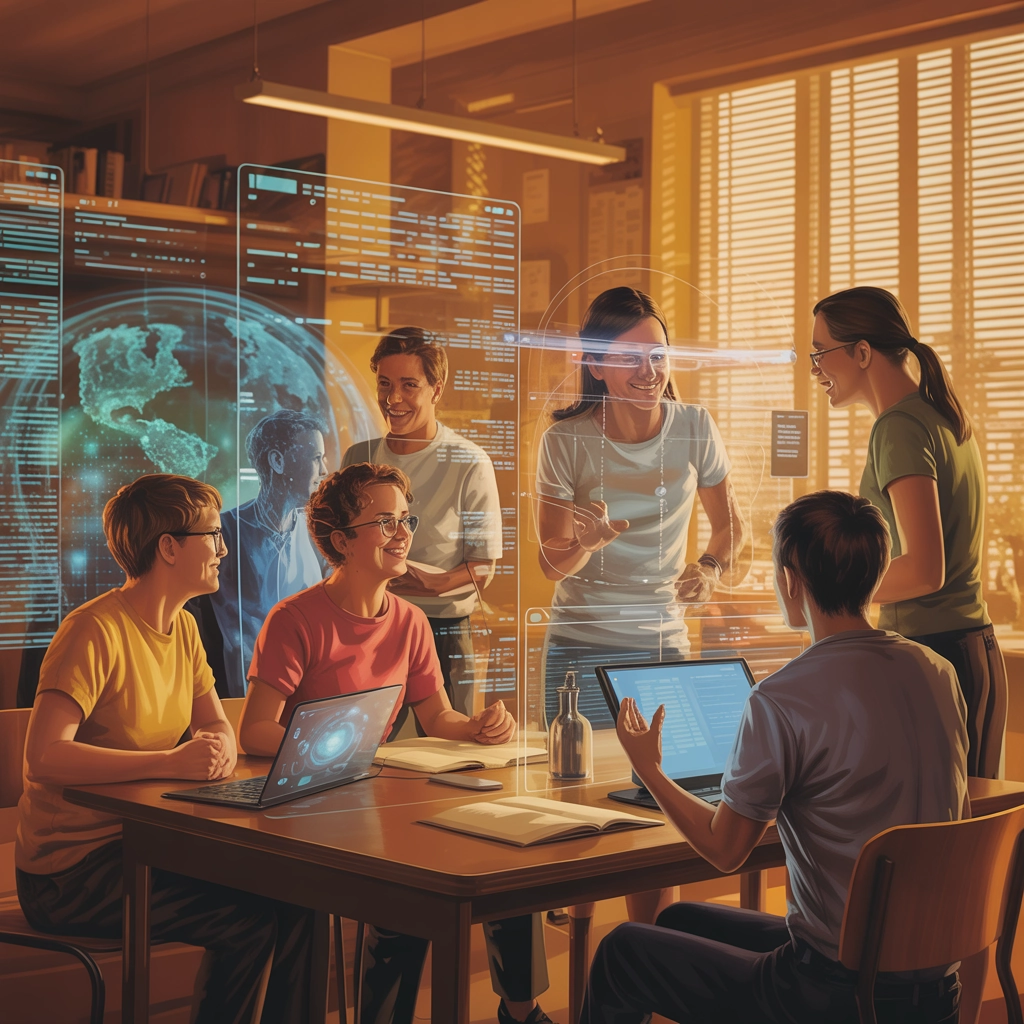
7. Preserve and Enhance Human Connection
The most critical principle: technology should strengthen human connections, not replace them.
Human-Centered Approaches:
- Design for conversation rather than consumption
- Create opportunities for meaningful peer collaboration
- Incorporate authentic faculty presence throughout the digital experience
- Balance automated elements with genuine human interaction
- Provide space for personalization and relationship building
Putting It All Together: A Case Study
Let me share how these principles transformed curriculum development at a local K12 institution, where I worked as a consultant last year.
The school had struggled with a disjointed approach to digital learning—some teachers were creating innovative digital experiences while others barely used the learning management system. Student feedback indicated confusion and frustration with the inconsistent approaches.
Working with their curriculum team, we implemented the seven principles above. First, we redesigned their core subject areas using an online-first approach, ensuring all materials were inherently digital while preserving opportunities for face-to-face interaction.
We mapped each unit to Gagne's Nine Events, ensuring pedagogical soundness regardless of delivery method. Then we created a content management system where teachers could easily adapt materials for different delivery contexts while maintaining consistency.
The results were remarkable:
- 92% of students reported improved clarity and engagement
- Faculty collaboration increased as teachers shared modular components
- The curriculum became genuinely resilient during unexpected disruptions
- Environmental impact decreased as paper usage dropped by 78%
- Most importantly, both students and teachers reported stronger connections and more meaningful interactions
Next Steps: Begin Your Transformation
Building a sustainable, future-ready digital curriculum while maintaining the human touch isn't a destination—it's an ongoing journey. Here are three ways to get started:
- Assess your current state: Evaluate your existing curriculum against the seven principles outlined above. Where are the gaps and opportunities?
- Start small: Choose one course or unit to redesign using these principles before tackling your entire curriculum.
- Involve stakeholders: Include educators, learners, and administrators in the process from the beginning.
Sustainable digital curriculum development isn't just about technology—it's about creating learning experiences that honor human connection while preparing for an uncertain future. The institutions that master this balance will thrive in the coming educational landscape.
Best always,
Dr. Tim Stafford
0 comments