
Hello, unconventional thinkers 💡
Most businesses don't suffer from a lack of ideas.
They suffer from repeating the same assumptions, looking at the same competitors, asking the same questions-and then wondering why the answers look familiar.
Thinking outside the box is not about being eccentric for the sake of it. It is about deliberately changing the frame: challenging assumptions, introducing unfamiliar perspectives, reversing the problem, imposing constraints, or simply asking a different question.
This month, we explore Using Out-of-the-Box Thinking in Business and some practical techniques for escaping habitual patterns of thought.
But creativity alone is not enough. A novel idea can still be a bad decision. That is where Rolf Dobelli's The Art of Thinking Clearly becomes the perfect counterweight: learning to recognize the cognitive shortcuts and systematic errors that distort our judgment.
First generate possibilities. Then interrogate your own thinking.
And then comes the fun part.
Five fresh startup concepts, provided by Vizologi AI, built from unexpected combinations of overlooked problems, emerging behaviors and untapped opportunities. From digital inheritance and unused urban space to human-made content, quieter cities and the invisible operating system behind family life.
Break the pattern.
See what appears.
🤓 Using Out-of-the-Box Thinking in Business.
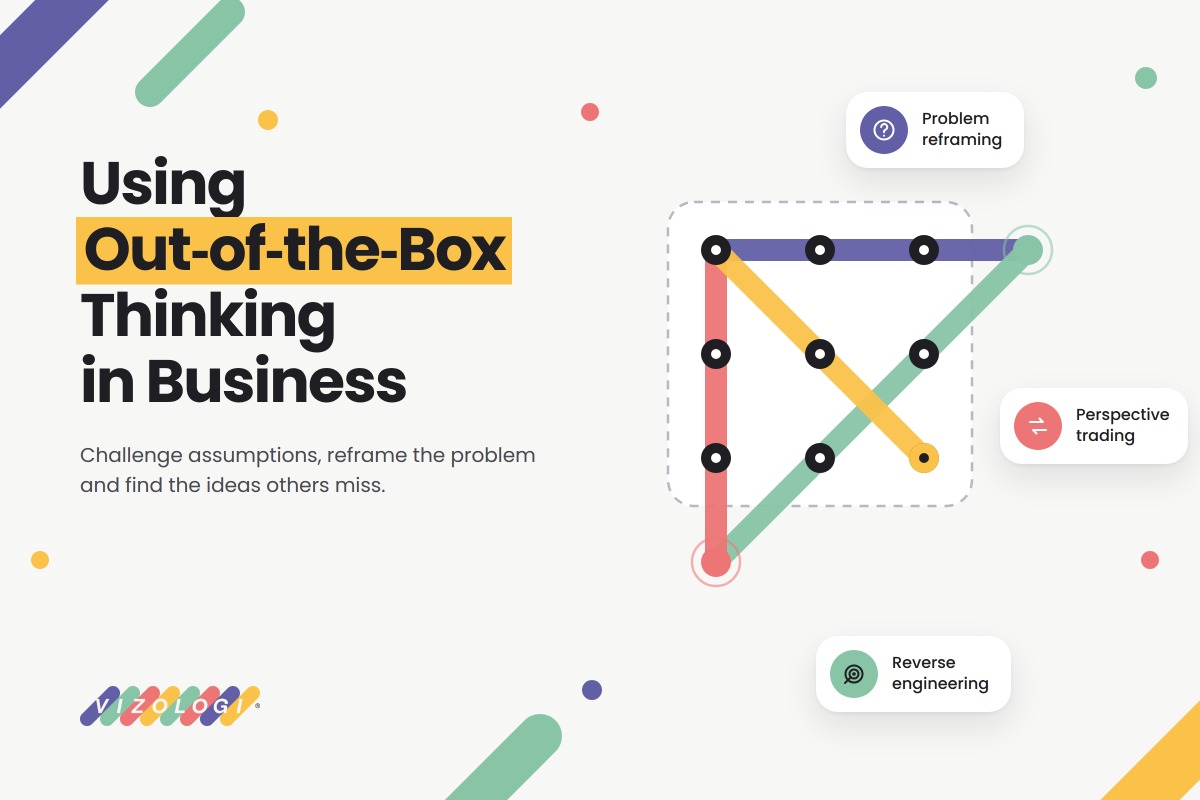
Thinking outside the box starts by challenging the assumptions surrounding a problem rather than immediately trying to solve it. The article explores practical ways to create that shift: bringing together diverse perspectives, reframing the original challenge, time-boxing idea generation, working backward from the desired outcome, consulting people outside your industry, and even borrowing the curiosity of a child. The objective is not permanent disruption. It is to expand the range of possibilities before deciding which direction deserves to become reality.
📚 The Art of Thinking Clearly.
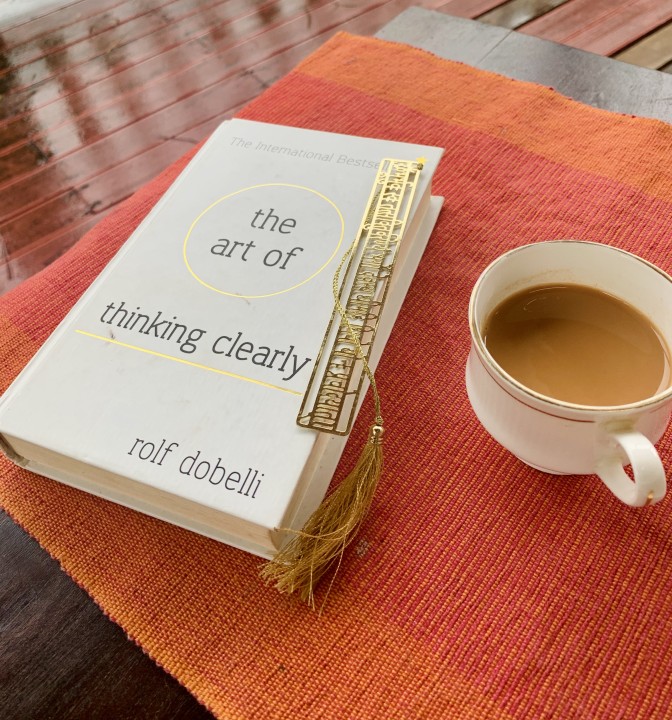
Rolf Dobelli explores the systematic errors that repeatedly distort human judgment. Our brains rely on mental shortcuts that evolved to help us make decisions quickly, but those shortcuts can become liabilities when evaluating money, risk, careers, opportunities, people, and business decisions. The practical value of the book is not learning how to eliminate bias entirely-that is probably impossible. It is learning to recognize recurring patterns in our own reasoning early enough to question them.
Clearer thinking begins with an uncomfortable possibility: sometimes the biggest obstacle to a good decision is the person making it.
🦄 Five cool startup ideas AI-generated with Vizologi.
1. Afterlife Cloud - Digital estate infrastructure for ordinary people
Most people accumulate decades of digital assets but leave no instructions for what should happen to them. Afterlife Cloud would organize subscriptions, domains, social accounts, cloud files, crypto records, digital purchases, and personal archives into a controlled inheritance system.
2. Borrowed Earth - A marketplace for temporarily unused land
Millions of small plots, gardens, rooftops, courtyards, warehouses, and rural properties remain unused for long periods. Borrowed Earth would let owners make those spaces available temporarily for urban farming, solar installations, workshops, events, storage, biodiversity projects, or community experiments.
3. Human Receipt - Proof that a human made it
As synthetic content becomes abundant, human creation may become a premium attribute.
Human Receipt would provide creators, journalists, craftspeople, photographers, teachers, and independent professionals with a provenance system showing how a piece of work was produced.
4. Quiet Hours - Cities as a bookable service
Urban noise is normally treated as something citizens endure rather than something that can be managed. Quiet Hours would aggregate real-time and historical sound data from neighborhoods, venues, traffic patterns, construction schedules, airports, and public events.
5. Second Shift - An operating system for family logistics
Running a household is effectively a small operations department with no software designed for it.
Second Shift would coordinate groceries, school schedules, appointments, household maintenance, bills, recurring purchases, family responsibilities, documents, and service providers in one shared system.
Create your own AI ideas now for FREE!👉 HERE
Enjoy the journey!
Pedro Trillo
Mavərick at Vizologi
Inspiring businesses don't exist yət!
0 comments